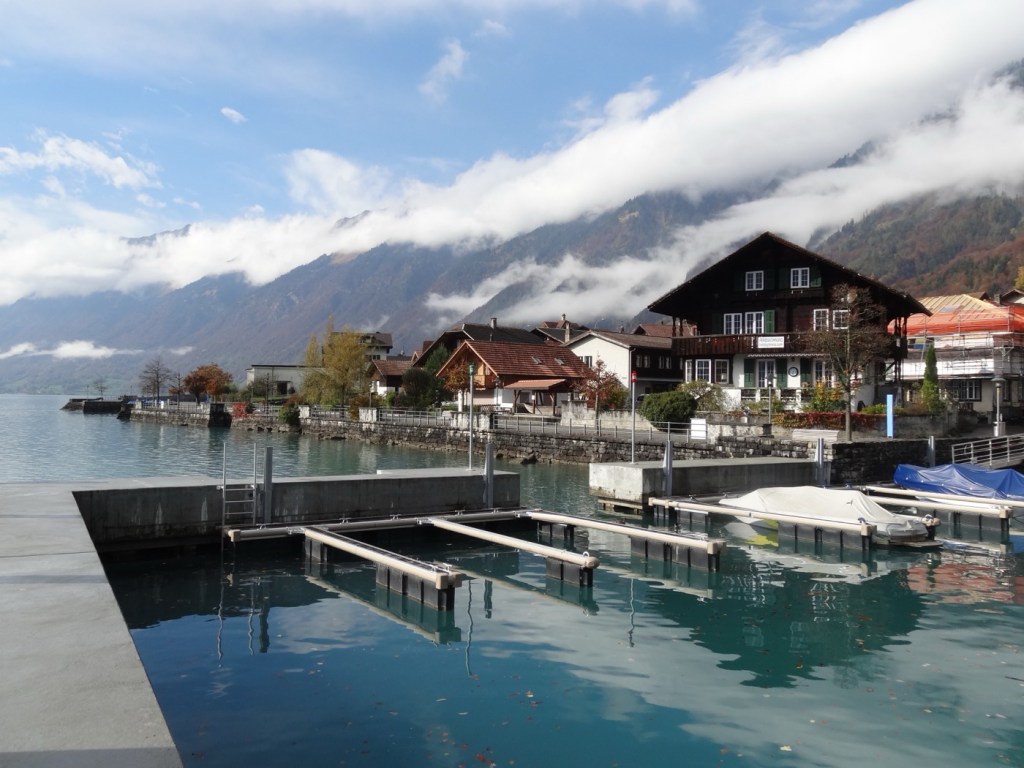
A shed load of calming thoughts needed, a few minutes thinking Switzerland.
The latest madness to add to the ever expanding simmering pot of mayhem comes from the US Health Secretary, Robert F Kennedy. I can think of a few F words that would fit perfectly there. In his words ‘Autism destroys families’.
Absolutely staggering. ‘Destroys’ implies burden, something intrinsically bad which needs isolating and eliminating. Implies the desire to remove from day to day life. This kind of language lays the seeds for Fascism.
I’m sorry Mr F….. Kennedy, what actually destroys families is the lack of meaningful support, it’s the constant fighting the system, it’s the ill informed, hurtful and dangerous comments made by deluded self absorbed politicians. Sadly Mr F…. isn’t on his own in the political world in thinking this way, we have them here in the UK.
Mr F…. Kennedy you are so WRONG. It has been and continues to be the best ever privilege to be a part of a happy, loving Autism Family. Every day I learn so much, see so much beauty, experience so much wonder, togetherness and LOVE.
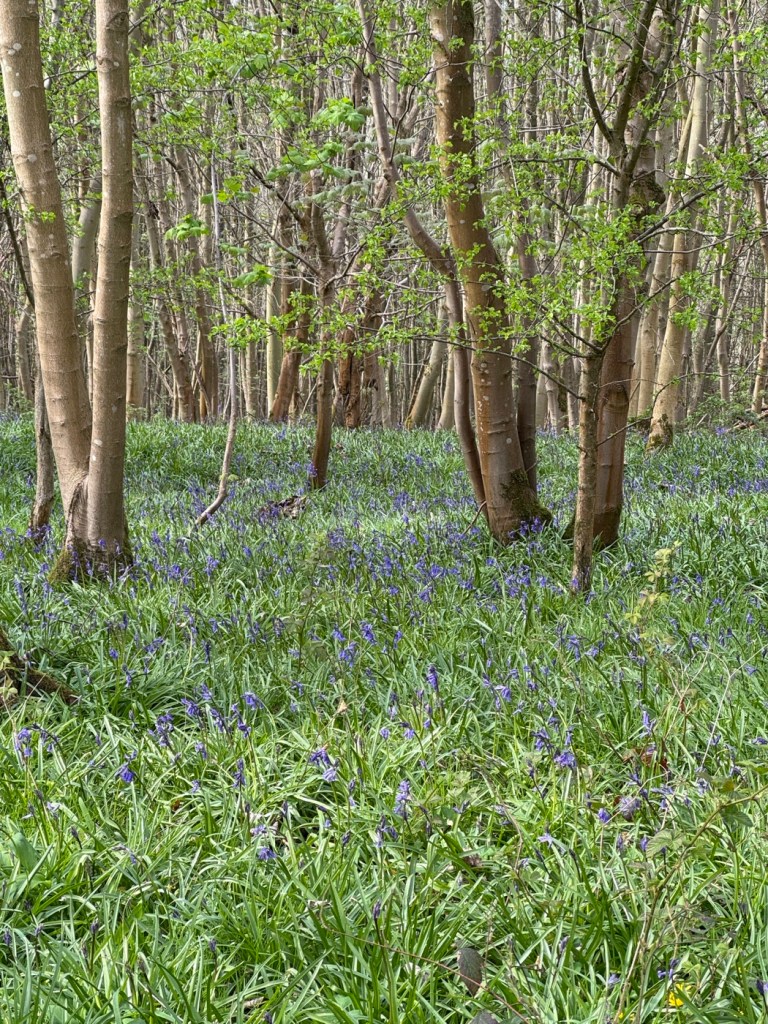
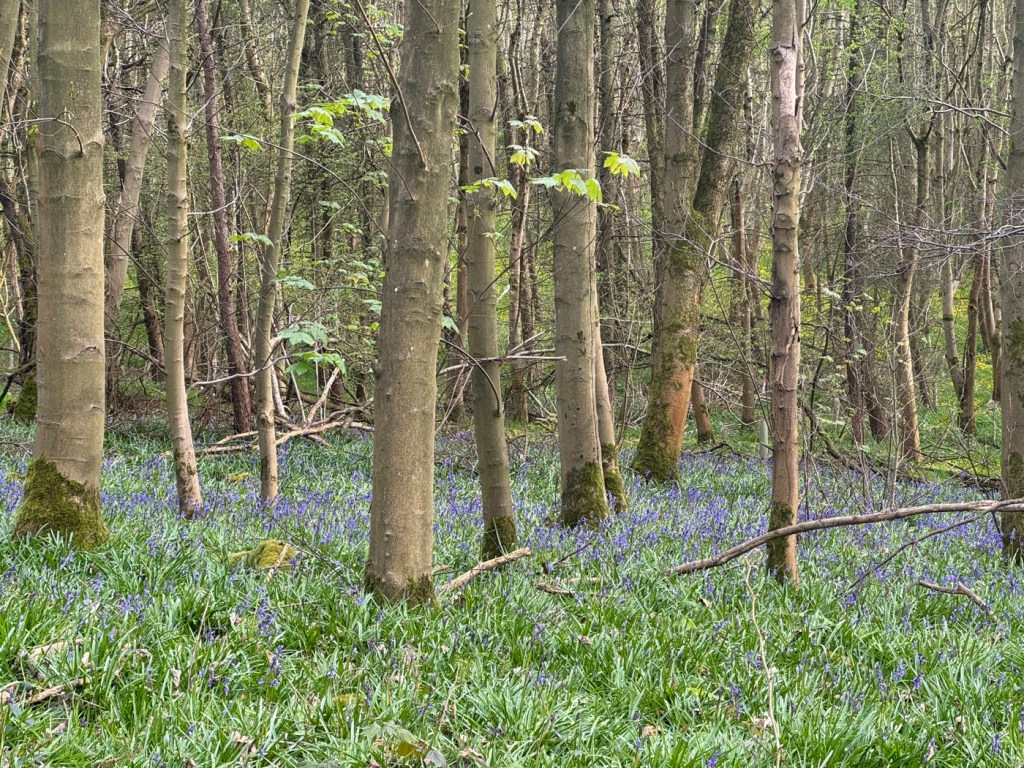
It’s that time of year when the Bluebells start to appear. We have a Bluebell Wood close by but today we headed a bit further. An hours walk over streams, fields and gentle hills. To a wood that we always talked about venturing to when we first moved here but never got round to it. Two decades later, much water under the bridge and finally we made it.
Beautiful walk but walking across farmers fields today bothered Hawklad. Just didn’t feel right for him, started to unnerve him. That’s the thing, somedays he can freely walk these paths, somedays not so. It’s not programmable, not predictable.
I was scrolling through an autism support website and a thread talked about employment. Just how difficult it is still to find employers willing and able to make the environmental adjustments and put in place the support individuals need to secure regular employment. Then for those in employment just how difficult it is to hold down regular employment. Many employment settings are just not autism friendly. On top of that, many talked about the unpredictability of work. Some days work is possible, other days it just isn’t viable. One young person described it as ‘some days I can walk into the office and work, other days I simply can’t get through my front door’.
Yet there seems to be an assumption at Government level, take away benefits and people will suddenly find regular employment to more than replace the lost benefits. Life isn’t that predictable sometimes.
Today we abandoned the farm tracks and walked along the quiet roads. That worked for Hawklad.
Caught the end of an interview with a UK politician who was giving his esteemed views on what was holding the country back and he specifically mentioned AUTISM…. That’s right along with Tariffs, energy costs, international conflicts, planning delays and the impacts of climate change, the cost of benefits, he specifically mentioned AUTISM….. He quoted the number of children currently diagnosed with autism and argued that it was clearly too high, and the rising numbers didn’t make any sense. He added that we weren’t seeing the same rapidly rising numbers in Adults…. And how far too many young people diagnosed with autism don’t get a job after they leave school, he argued reliance on benefits was a root cause of this. So if you cut the benefits available, more young people will enter (forced back into) the workforce. He concluded that the country needed to go back to some good old parenting with a sprinkling of tough welfare love. Welfare reform will over time stem the tidal wave of autism while reducing the tax burden on businesses and hard working taxpayers.
I keep hearing this argument more and more in 2025. Similar arguments are being directed towards a range of mental health and disability areas. Tough love will work and reduce the tax burden. One Government Minister even likened reducing disability benefits to cutting a child’s pocket money and encouraging them to get a Saturday job. Let’s not forget, Ministers usually closely stick to a script pre agreed by those at the highest levels of the Government. Those in charge don’t care or they are completely out of touch with the reality faced by millions they are supposed to be representing.
The reason adult autism rates are not rising is down to a couple of key issues. At the age of 18 autism support largely stops in the UK. Clinicians providing Child Autism Services do not have an equivalent adult service to hand an 18 year old on to. As a result large numbers simply drop off the system as adults. Relatively few General Practitioners (Family Doctors) have detailed autism training and it’s hard for them to make an assessment on the basis of a 3 or 5 minute standard length Doctor Appointment. As a clinician who worked with Hawklad explained to me, if an adult approaches a GP with an autism related issue, the busy GP will have little time to make an accurate assessment and anyway they won’t have any adult services to refer on to. So far too often GPs just end up offering some leaflets on mindfulness and possibly a course of Anti Depressants or sleeping medication.
That’s assuming that GPs are actually approached in the first place.
At school Hawklad was expected to put his hand up to get help with reading, or if he was feeling uncomfortable or struggling. But that meant announcing to his classmates that he couldn’t read something or having to publicly announce he was feeling uncomfortable, that was never going to happen. We might be in 2025 but we live in a world where way too many people have closed minds and the media still paint with inaccurate and harmful stereotypes. Autistic children still get bullied and pointed at in the school setting. Not only by children, sadly by parents as well. So Hawklad never put his hand up and the teachers assumed he was ok, the end result, he never got the classroom help he badly needed. Years later, he still won’t put up his hand with strangers or people he doesn’t trust. Even if he’s struggling, he is unlikely to call a GP for help.
Eleven years ago I remember reading a newspaper headline about Autism. I can picture the scene clearly, sat on a platform at a London train station, waiting for my connection back North. A once smart black suit now a bit creased and unfortunately showing clear signs of an egg sandwich accident. Under the headline a politician was claiming that finally autism was now mainstream, embraced and on the political agenda. Individuals on the spectrum were finally going to start to get the help and support they needed. I remember the article so clearly because the newspaper had managed to spell Aspergers wrong….
2025 and I’m sat in a traffic jam, listening to the news. A politician is talking about Autism. Apparently far too many children are being diagnosed as autistic and it’s costing way too much money. The reason behind the rising cost couldn’t be real and was clearly due to pushy parents playing the system. It was unfair on taxpayers, businesses and other parents. That’s why it was right that the Government was going to crack down on the issue. Crack down on the rising tide of Autism….
2025 still finds concerts as a dependable friend. A break from the routine, a link with my earlier self for me. An adventure that Hawklad has confidence in and can rely on, a bridge for him. While holidays are still feeling a step too far, concerts take their place.
Some of the concerts are for me, some are Hawklad’s idea, most we agree on. This year is an eclectic mix. Springsteen, ELO, Al Stewart, Iron Maiden, Guns n Roses and Andrea Bocelli.
This one was my idea. Finally getting to see Fish after years of waiting. Left it late, this was his fourth last concert, his last one in England before he retires to his Croft on a Scottish Isle.
I wonder if quite a few in the crowd had the same feeling as me. Got really into music listening to artists like Fish, followed their careers as time passed. Now decades have passed, the bodies aren’t so willing to stand for hours now. Most of the long hair and tight jeans have gone. Yet we are still fans, the music sounds just as wonderful as it did at the start of this adventure. But increasingly we are attending final concerts of our music heroes.
The dust is now settling on what feels like a new world. A while back Hawklad had his last bit of support from the Child Mental Health Team. As the threshold for Adult Support is so high and because there is actually no equivalent Adult service, that’s it. The need doesn’t suddenly go away as a birthday is reached, but in the UK, the service does.
It was odd, I wasn’t sure what to expect with the last appointment. Maybe a number to call if he really needs support, maybe some pointers where he could seek help, maybe a support website, a handful of support guides. But in reality it was a simple ‘best of luck’ and you will need to speak to your Doctor if you need help from now on. However Hawklad had already been warned that most Doctors support will be limited to Mindfulness Leaflet and the offer of Antidepressants.
Yes I’m concerned for Hawklad going forward but my heart really goes out to those who need way more support and suddenly find themselves cut adrift. I heard it described as a Trapeze artist who is performing a routine and suddenly finds the safety net missing. Maybe but just maybe the safety net is also there for the artist who can’t even make it onto the high wire. The artist who is struggling to even leave the house, struggling to function in daily life.
Without health support it’s down to self help, family and friends, thankfully Hawklad has some of that around him. But we need to recognise that most of us are not trained health professionals, effectively relying on a Wikipedia knowledge base. But at least it’s still support, importantly support that cares.
BUT many who are struggling are on their own, without any kind of local or specialised support. That can’t be right.
Language is so important. More than ever it frames the debate, creates headlines, fills social media channels and sadly can alienate, castigate.
We all have different views on society, on politics. In the UK, to me the last few years has been unremittingly grim. And yes I’m not the only one who thinks that.
Am I pleased there was a change in government last year, YES, maybe the right word is RELIEVED.
Am I pleased with the new government. NO, but to me it’s way less bad than what came before it. A bit of good stuff, some puzzling stuff, some bad stuff.
The BAD stuff includes LANGUAGE. I don’t like the language the government often uses in terms of Mental Health and Disabilities, in terms of the many needing real help. Way too often the language is grim, divisive, and riddled with stereotypes which easily make its way on to the front page of gutter newspapers. It portrays a real insensitivity and a clear lack of understanding on the real issues and problems many face during every day life. What happened to the so called enlightenment that society went through on how it sees Mental Health and Disability.
I completely understand the need to control spending, to ensure it’s targeted where it’s needed. BUT…
The language often being used creates the false impression that most on Mental Health and Disability benefits are intentionally work shy, have a choice to either push through any issues they may face to work or to choose to stay at home, lead a life of leisure paid for by taxpayers. How the rising mental health crisis is just a sign of an increasingly work-shy population, it just can’t be based on real need. How the rising demand for special educational support is more down to pushy parents than actual individual child need. How every pound spent on a child with specific educational needs is in some way depriving the vast majority of pupils much needed new books or teaching opportunities. That those benefits that are essential to so many people are in some way an extravagance, a waste of resources, unfair on hard working taxpayers.
This language then fuels so much which is wrong in our modern world. False information, bullying, victimisation, mistrust, division and hatred.
Is it really 2025, is this really positive change and new hope….
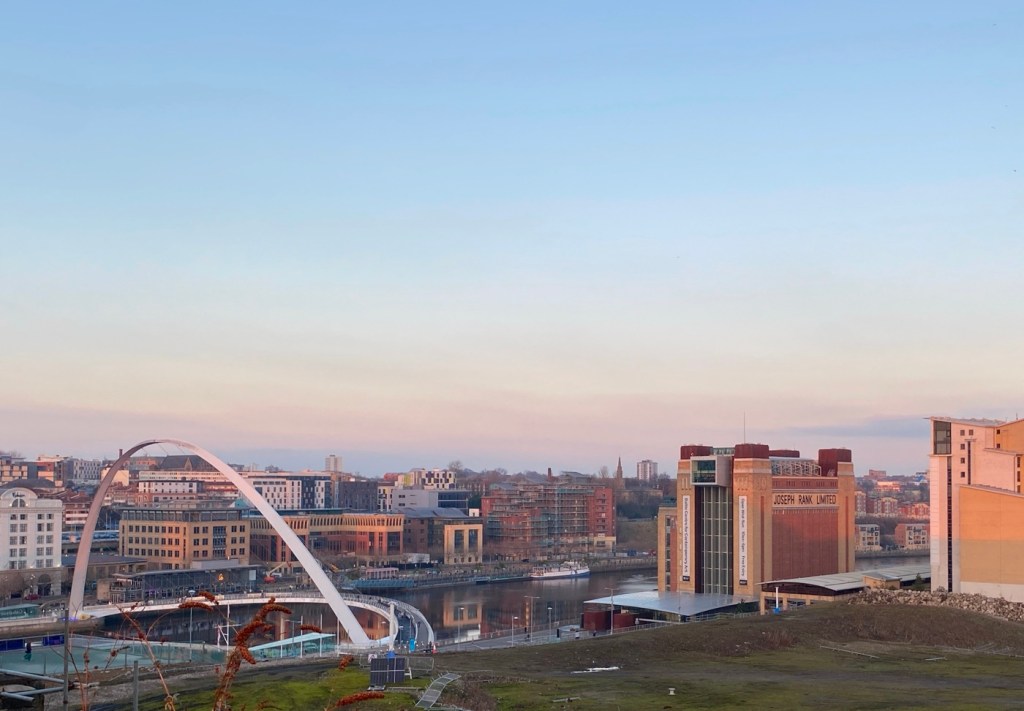
The view from the top of the modern art gallery, The Baltic. A converted old flour mill set next to the River Tyne, on this cloudless yet cold Saturday afternoon. Trying to forget the proceeding two hours, where my alleged football team successfully donated 3 points and way too many goals to a visiting, actual football team….
The Baltic is the Joseph Rank building…
I’ve been thinking about the support Hawklad has had from the Education and Health services. Lots of ups and downs, hopefully a few more ups…. In the UK it can be a bit of a postcode lottery. Some parts of the country offer more support, more joined up support than others. Our area is definitely in the OTHERS column. An area that has prided itself on highly streamlined services, so streamlined that a few too many services have disappeared completely in repeated budget cuts.
Fortunately a few services survived and have tried to help Hawklad. So thankful for those. But even for those services, what hasn’t helped is the constant change over in staff. The longest Hawklad had the same nominated support clinician was 18 months, often they would change at least twice a year. He’s had 7 different Paediatricians. As for his Education Support Officer, they have changed more frequently than managers at my so called football team… Over the last 3 years, this officer has changed 8 times. This week we phoned to talk about exam support and yes, the person has changed again. Every change brings delays and the need to bring the new person up to speed on Hawklad, who he is and his needs. Above all things, Hawklad has to try and build up a connection, time and time again. That’s so not easy for him. It really doesn’t help him. Some changes are unavoidable, people move on, that’s life but frequently, the change has been down to management decisions. Too often we’ve read or heard the following words ‘unfortunately he’s been taken off my case list so I’ve had to hand his files over to another professional, hopefully they will be in touch with you soon….’
Continuity, hard thought connections and openness based on trust are so important to successful support and therapy. Listen to Hawklad and he will talk about this way better than me. But here’s another thing. How often do the services listen to the kids they are trying to support. In our area, the answer is I suspect somewhere near, never. To my knowledge, he has never been asked. Maybe if they did they might start to understand better the importance of qualities such as Continuity in the services they are trying to provide.
Hawklad now has three support sessions left then he’s discharged from Child & Adolescent Mental Health Services. He’s discharged because at the age of 18 there is no equivalent Adult service to be handed over to. There is some voluntary charity provision but it is very patchy.
Research has repeatedly highlighted the implications that can flow from the removal of dedicated mental health support as soon as someone reaches the age of 18
– Increased risk of Isolation and loneliness
– Escalation in untreated/undiagnosed mental health conditions
– Increased risk of depression and self harm
– Life opportunity limitations
– Increased risk of unemployment and employment insecurity
Even for under 18’s, services are stretched and far too many children don’t get the support they need.
From the age of 18 any formal support has to accessed via the Doctor Lottery system. Post Covid, in many areas patients have to try to navigate the appointments labyrinthine. Join a telephone queue at 8am and wait in line to be answered, a few minutes late and all the appointments for the day will be booked solid. If slots are still available you then first have to explain the symptoms to the Doctor Receptionist who then decides if you can have a face to face GP appointment or more likely a telephone call back. Way too frequently you are either told to try again tomorrow for an appointment or to try to self treat. If you do get a precious appointment or callback, you have at most about 5 minutes with a Doctor. In our surgery it is quite rare to get your own GP, often speaking to someone who is looking at your records for the first time. It feels very rushed and pressurised. Then you’re faced with a Doctor who is unwilling or unable to refer you to a specialist mental health service. As one Consultant told me,
Many Doctors just don’t fully understand specialist Mental Health areas. They are stretched and sadly they often try to treatanything that might look like Autism or ADHD with Antidepressants and a leaflet on Mindfulness.
This whole process ain’t going to work for Hawklad, he isn’t going to go through this process to get any support that he might need in the future. Family support is going to be even more important for him in the future. But then again, he doesn’t exactly have many trained mental health care professionals in the family…. That’s such a worry going forward.
Blue Sky Yorkshire, if only this was the norm. Bonfire Night was certainly way more cloudy, way more drizzly. A few very damp fireworks, definitely way less than previous years. The only disruptive noise coming from next door’s mad Dog barking incessantly at the local Owl. The Owl sits on a tree overlooking the garden, and turns it back to the Dog. The Dog must get really frustrated at being ignored.
Hawklad loves F1, he has a real fascination for the motorsport. At the weekend we went to a talk by a former Team Principal and real character, Austrian Guenther Steiner. Hawklad loved it, especially as we got seats that were not next to anyone else, that really helps. If he feels hemmed in then it becomes way too stressful for him. If he feels stressed then he usually has to quickly leave. He has survived a number of rock concerts largely because of the combination of the noise, the darkness and people focused on the stage. This all adds to a feeling of anonymity, that’s the key. Plus he can move around to find less busy areas. He just doesn’t want to feel like he is seen.
This was all brought into stark focus after the talk had finished. Hawklad put his head down, hoody over his head. Out of the Arena, through the streets for 40 minutes, he never looked up once. Only when he got back into the safety of the car, did he raise his eyes and relax. The social side to life is so difficult for him.






 A Dad trying to cope with the loss of his Partner and becoming a single parent.